
Money laundering is a serious financial crime that is closely monitored across the global gambling industry. Both land-based and online casinos are classified as regulated, high-compliance environments due to the volume of financial transactions they process daily.
Modern casinos do not facilitate illegal activity. Instead, they operate under strict licensing frameworks designed to detect and prevent suspicious financial behaviour.
This article explains what money laundering is, why casinos are monitored, and how the industry actively prevents misuse.
What is money laundering?

Money laundering is the process of disguising illegally obtained funds so they appear to come from legitimate sources.
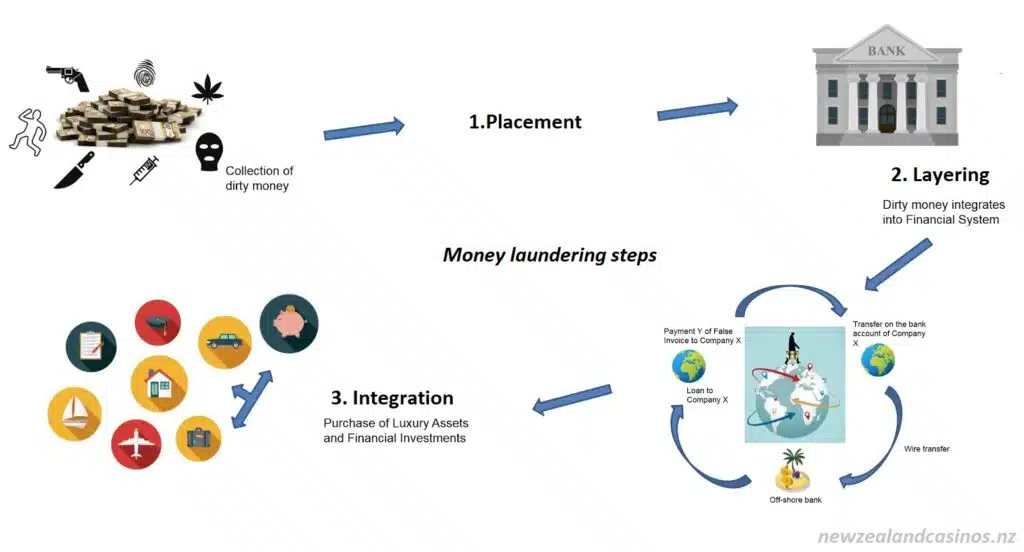
Regulators and financial institutions typically describe it as a three-stage process:
- Placement – introducing funds into the financial system
- Layering – creating complex transaction patterns to obscure origin
- Integration – reintroducing funds as “legitimate” money
These stages are used in compliance and anti-financial crime frameworks to help detect unusual or suspicious activity.
Why casinos are monitored for financial crime risk
Casinos are considered “high-risk” financial environments not because of criminal intent, but because:
- They process large volumes of cash and digital payments
- Funds can move quickly between deposits and withdrawals
- Players may use multiple payment methods
Because of this, regulators require casinos to implement strong identity and transaction controls.
How regulated casinos prevent money laundering
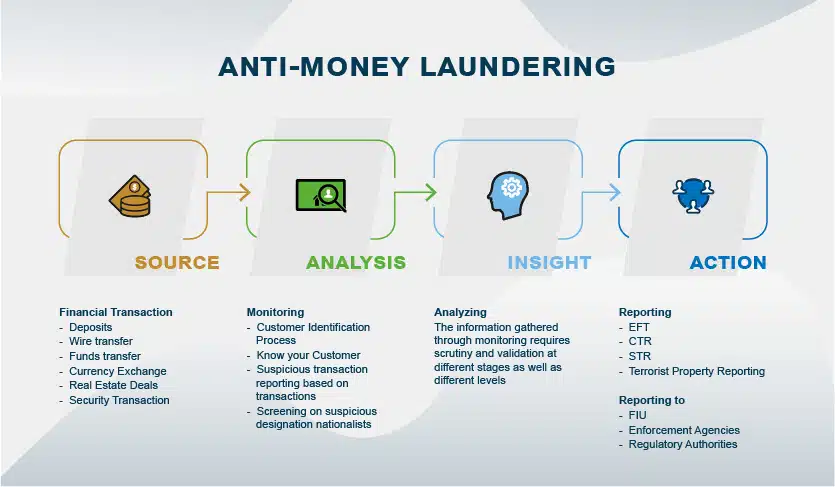
Licensed casinos operate under strict Anti-Money Laundering (AML) obligations. These systems are designed to detect, prevent, and report suspicious activity.
1. Customer verification (KYC)
All regulated casinos require identity verification, which may include:
- Proof of identity (passport or ID)
- Proof of address
- Payment method ownership checks
This ensures that accounts are linked to real individuals.
2. Transaction monitoring systems
Casinos use automated monitoring tools to identify unusual behaviour patterns, such as:
- Sudden large deposits or withdrawals
- Unusual betting activity
- Inconsistent gameplay patterns
Suspicious activity may trigger manual review by compliance teams.
3. Source of funds checks
For higher-risk or high-value transactions, casinos may request documentation showing where funds originate from. This is standard in regulated gambling markets.
4. Reporting obligations
Licensed operators are required to report suspicious transactions to relevant authorities under AML legislation. This is a legal requirement in most regulated jurisdictions.
Money laundering risks in gambling (high-level overview)

While regulated casinos have strong safeguards, financial crime risks are still studied by regulators. Common typologies discussed in compliance frameworks include:
- Rapid conversion between deposits and withdrawals
- Use of multiple accounts or payment methods
- Attempted layering of transactions through gambling activity
These are not “methods used by casinos”, but risk indicators monitored by compliance systems.
Online casinos and AML controls
Online casinos are typically subject to even stricter monitoring than land-based venues due to digital traceability.
Key controls include:
- Digital identity verification systems
- IP and device tracking
- Real-time transaction screening
- Behavioural analytics
These systems allow operators to flag suspicious activity quickly.
Cryptocurrency and compliance challenges
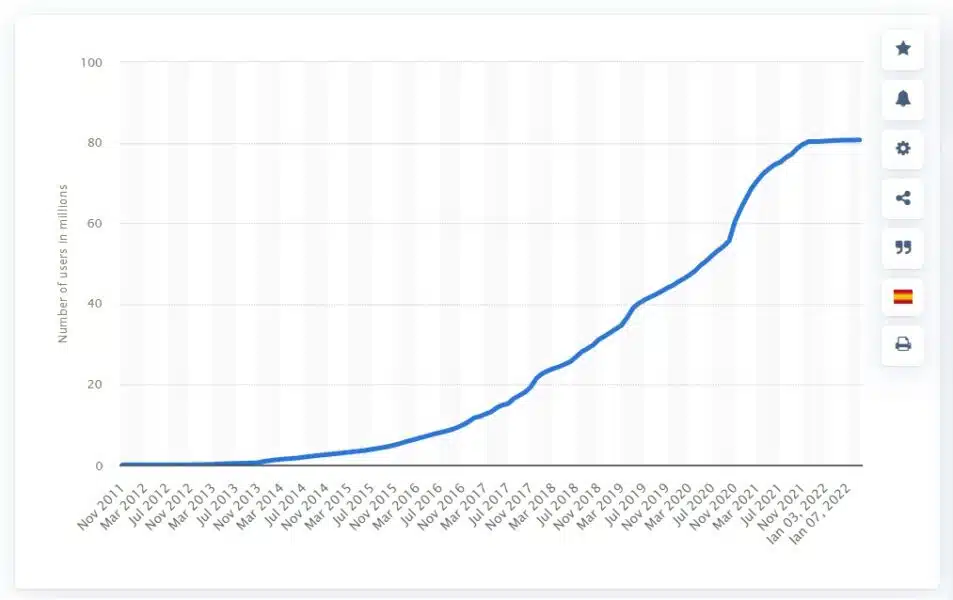
Some casinos support cryptocurrency payments, which can introduce additional compliance complexity due to the nature of blockchain transactions.
However, licensed crypto casinos are still required to apply AML controls, including:
- Identity verification (KYC)
- Blockchain transaction monitoring tools
- Source of funds checks where required
Crypto does not remove compliance obligations in regulated environments.
Role of regulation and licensing
Regulatory bodies enforce strict rules on casino operators to prevent financial crime. These may include requirements from:
- Gambling commissions
- Financial intelligence units
- International AML standards (FATF guidelines)
Licensed operators must maintain documented compliance programs and undergo audits.
Responsible gambling and financial safety
AML systems also overlap with responsible gambling protections. Monitoring financial behaviour helps casinos:
- Identify potential harm patterns
- Apply deposit limits or restrictions
- Offer self-exclusion tools where needed
This creates a safer environment for players and helps maintain regulatory compliance.
Final thoughts
Money laundering is a serious global financial crime, and the gambling industry is one of the most heavily regulated sectors because of it.
Modern casinos do not operate as uncontrolled environments. Instead, they are subject to strict verification systems, transaction monitoring, and legal reporting obligations designed to prevent misuse and protect both players and the financial system.